Reading a sheet of cubes before anything else
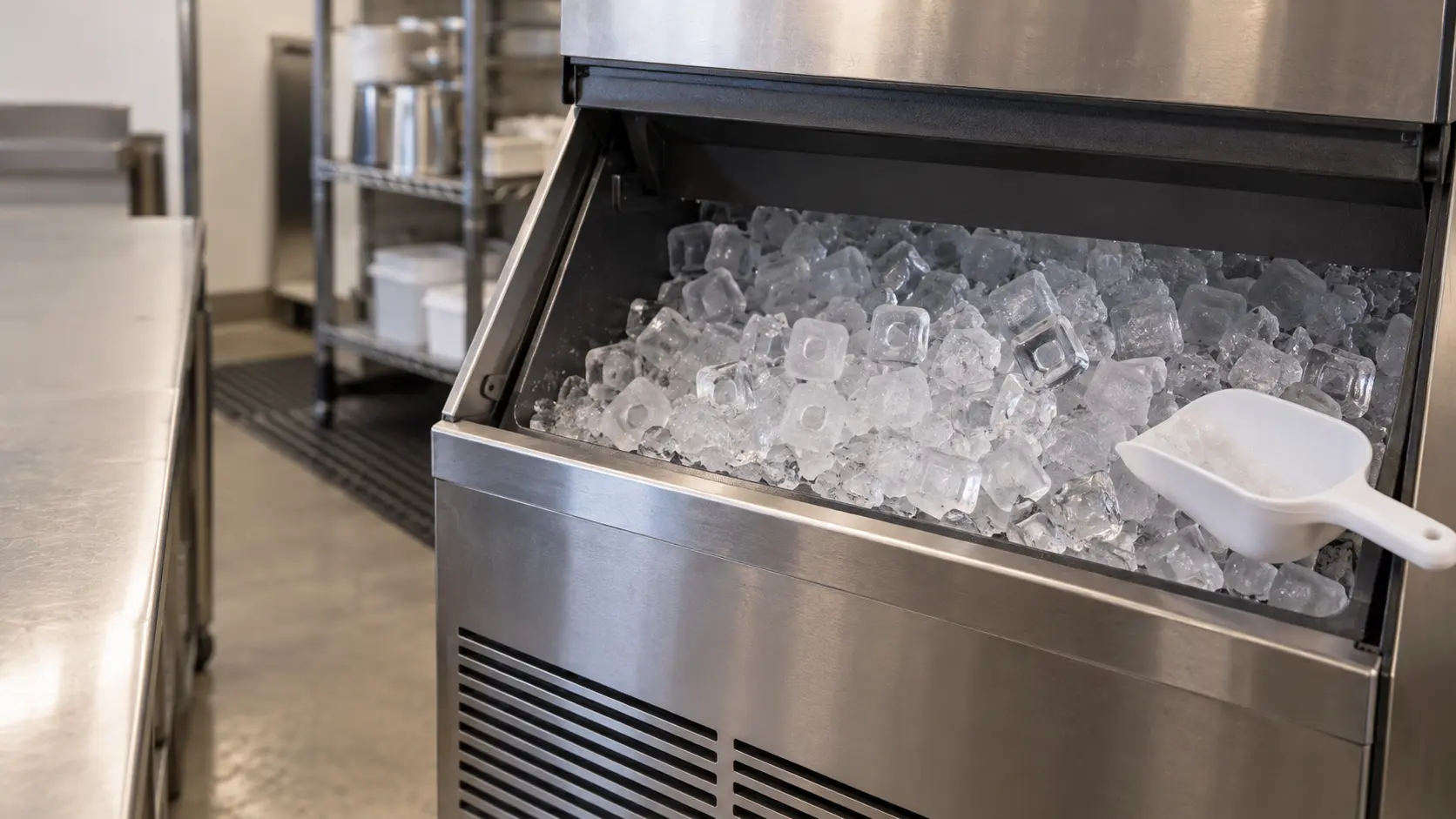
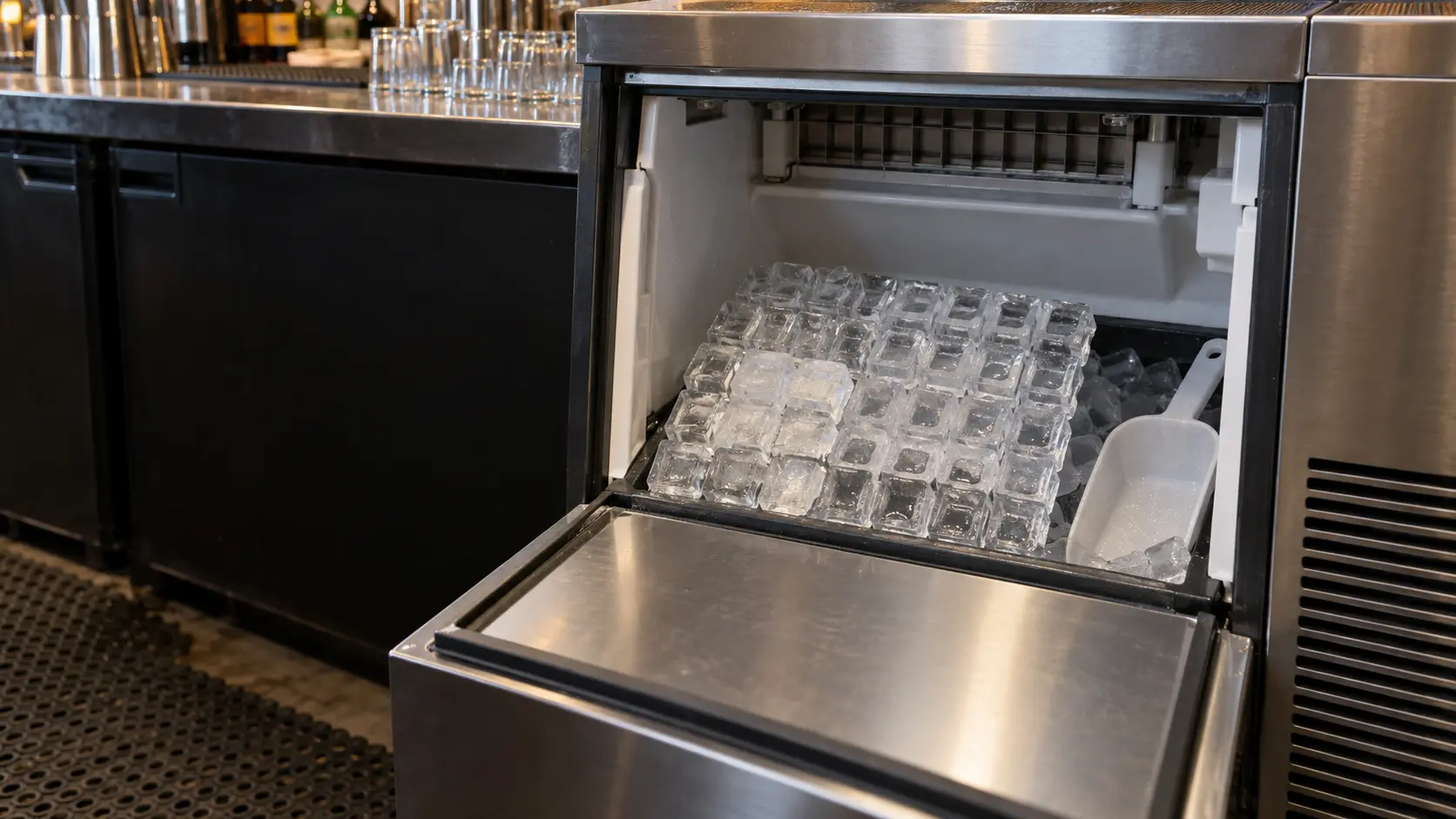
A modular or undercounter cuber freezes one grid of cubes joined by a thin web of ice called the bridge. When the sheet drops, it breaks along the bridge into separate cubes. Pull a handful out of the bin straight after a harvest, before they melt together, and lay them on a dark tray: the pattern is easier to read than any single cube.
An ice machine making small or hollow cubes is telling you one of two things. Either the water stopped reaching the plate evenly while the ice was forming, or the machine decided to harvest before the ice was finished. The rest of this guide is about working out which, because the fixes do not overlap.
- Every cube shallow and dimpled in the middle: water or timing across the whole plate.
- Full cubes at the bottom of the sheet, thin or missing ones at the top: water not reaching the upper rows.
- One column of cubes missing all the way down: a blocked hole in the water distribution tube.
- Ragged, misshapen or chalky cubes: scale on the plate or in the water path.
Nugget ice machines and dispensers
Nugget and chewable ice does not come from a plate, so there are no cubes to go hollow. The equivalent complaint on a nugget ice machine is wet, slushy ice or small crumbly pieces, and it has its own causes in the auger and the water feed. The checks on water supply and scale below still apply to it.
Water that runs short during the freeze
During the freeze a pump lifts water from the trough to a distribution tube across the top of the evaporator, and the water runs down the plate and back into the trough. As ice builds, the trough level falls. If it started low, or if the pump is starving, the upper cells stop getting water before they are full and the machine harvests a lopsided sheet.
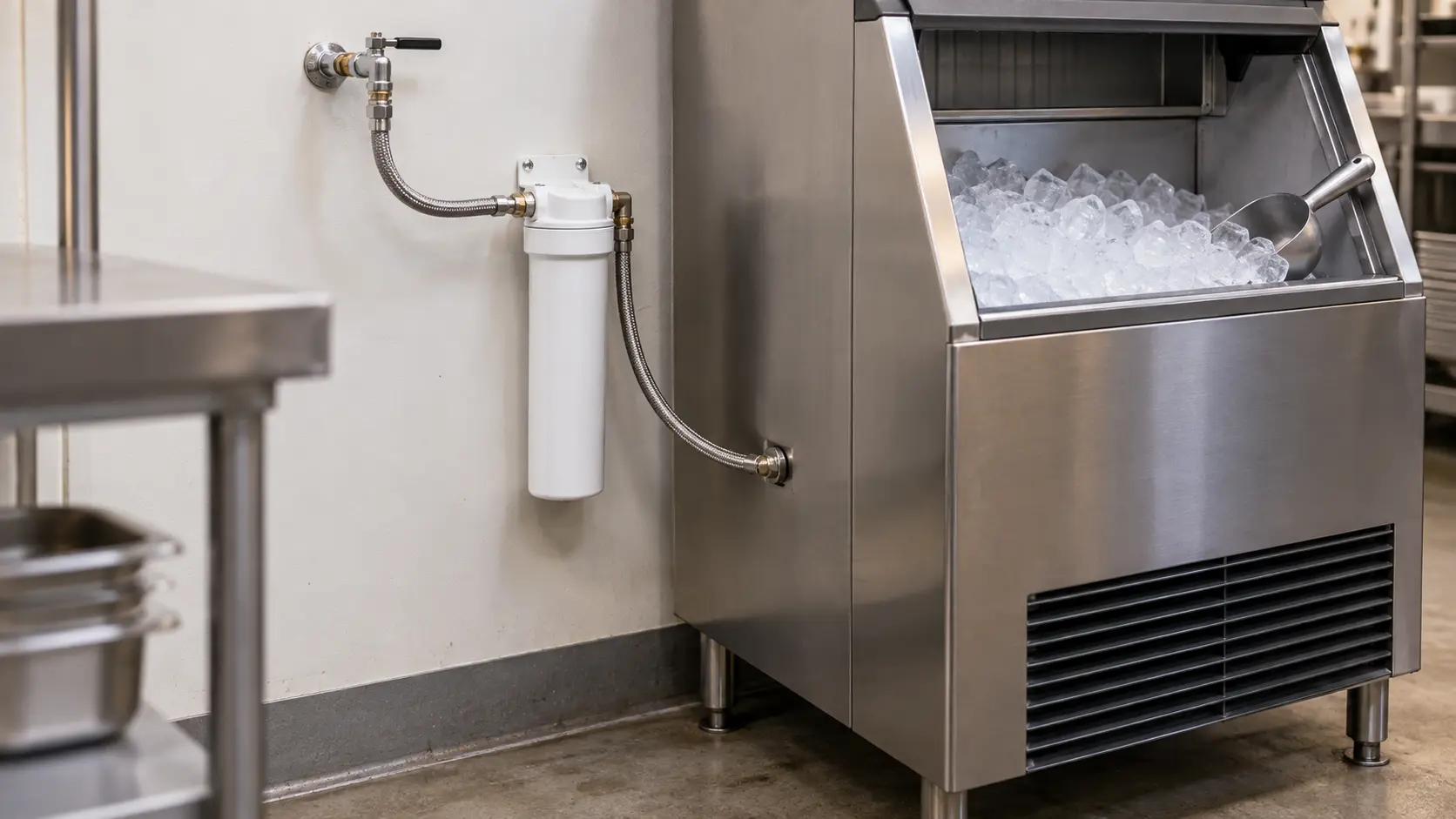
Manitowoc's troubleshooting table lists the likely reasons: the water level in the trough too low, a dirty filter screen in the water inlet valve, poor water filtration, hot incoming water, a water inlet valve that is not working, pressure outside 20 to 80 psi, and a head sitting out of level. Most of those are visible from outside the cabinet.
Warm water at the inlet
Manitowoc wants ice-making water between 40°F and 90°F and says never to connect a hot supply. The usual way it happens by accident is a supply line teed off near a dishwasher or a water heater, or a long run of tubing through a hot mechanical room. Warm water freezes unevenly and costs both shape and output.
A machine that is out of level
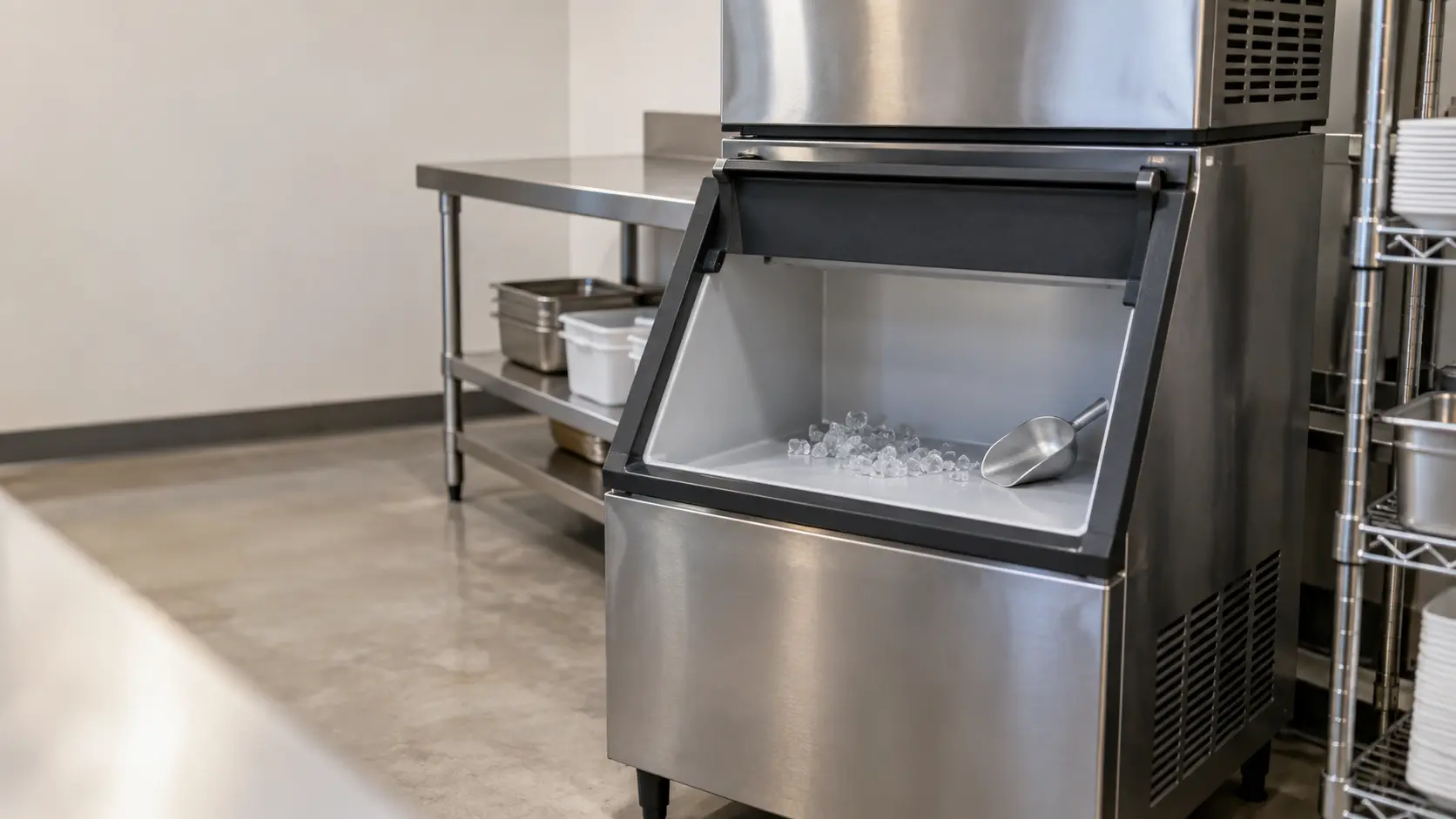
A tilted head sends the water down one side of the plate. Both the head and the bin should sit level side to side and front to back, and a machine that was bumped by a cart or had a leg leveler shift on a wet floor can start making half-cubes on one edge. A small level on the top of the cabinet settles the question in seconds.
Source: Manitowoc — Indigo NXT ice machines, installation, operation and maintenance manual — Shallow or incomplete cubes from probe adjustment, low trough, dirty inlet screen, poor filtration, hot water, inlet valve, pressure outside 20 to 80 psi, machine not level; ice-making water 40°F to 90°F; 1/8 inch bridge, one-third turn is about 1/16 inch; clean and sanitize at least every six months and discard ice made during cleaning; uneven fill means a service company checks the cooling system

Scale on the plate and the distribution tube
Hard water leaves minerals behind every cycle, and they collect where the water is: on the evaporator, in the holes of the distribution tube, on the water level sensor and on the thickness probe. Scotsman's residential manual explains that purer water freezes first, which concentrates minerals in the reservoir water, and that the deposits eventually cause malformed cubes. It describes normal cubes on that machine as tapered cylinders and says ragged, misshapen ones mean scale must be removed.
Scale on the probe has a second effect: it can make the control read the ice as thicker or thinner than it is. The cure in both cases is the cleaning procedure in the maker's manual, with the approved cleaner diluted exactly as printed. Every cube the machine makes while the cleaning cycle runs goes in the drain, not the bin, as Manitowoc instructs.
- Check the date of the last cleaning against the manual: at least every six months on Manitowoc, a minimum of twice a year on Scotsman modular cubers.
- Wear the gloves and eye protection the manual asks for, and stick to the cleaner and sanitizer it names.
- Discard every batch made during the cleaning cycle.
- If the machine needs cleaning much more often than the manual says, have the water tested.
Source: Manitowoc — Indigo NXT ice machines, installation, operation and maintenance manual — Shallow or incomplete cubes from probe adjustment, low trough, dirty inlet screen, poor filtration, hot water, inlet valve, pressure outside 20 to 80 psi, machine not level; ice-making water 40°F to 90°F; 1/8 inch bridge, one-third turn is about 1/16 inch; clean and sanitize at least every six months and discard ice made during cleaning; uneven fill means a service company checks the cooling system; Scotsman — C1448 and C1848 modular cuber installation and user's manual — Bridge factory set at 3/16 inch; bridge thickness adjustment for the service tech only; too thin a bridge prevents proper harvest; clean and sanitize the water system a minimum of twice per year; Scotsman Home Ice — SRC065 residential ice machine installation and user's manual — Purer water freezes first and concentrates minerals; normal cubes are tapered cylinders; ragged or misshapen cubes mean scale must be removed; softened very hard water can give white, mushy cubes
The thickness probe and an early harvest
On most cubers a small probe sits a fixed distance from the evaporator. When the growing ice reaches it and water bridges the gap, the control starts a harvest. If the probe is set too close, the sheet drops early and every cube is shallow; Manitowoc sets it to produce a bridge of about 1/8 inch and notes that one-third of a turn on the adjusting screw changes thickness by roughly 1/16 inch.
That sensitivity is exactly why this is not an owner adjustment. Scotsman's modular manual labels bridge thickness as for the service tech only and warns that a bridge set too thin keeps the machine from harvesting properly. If the water and cleaning checks are done and the cubes are still shallow, book the adjustment.
An uneven fill after cleaning
When the trough is full, the distribution tube is clear and the sheet is still thin at the top, Manitowoc's table sends the next step to a service company to check the cooling system. That is a sealed-system diagnosis with gauges, and on a machine charged with flammable R-290 it is never something to probe from the outside.
Source: Manitowoc — Indigo NXT ice machines, installation, operation and maintenance manual — Shallow or incomplete cubes from probe adjustment, low trough, dirty inlet screen, poor filtration, hot water, inlet valve, pressure outside 20 to 80 psi, machine not level; ice-making water 40°F to 90°F; 1/8 inch bridge, one-third turn is about 1/16 inch; clean and sanitize at least every six months and discard ice made during cleaning; uneven fill means a service company checks the cooling system; Scotsman — C1448 and C1848 modular cuber installation and user's manual — Bridge factory set at 3/16 inch; bridge thickness adjustment for the service tech only; too thin a bridge prevents proper harvest; clean and sanitize the water system a minimum of twice per year