
Start with the water, not the machine
When ice machine ice tastes bad, begin with a glass from the tap. An ice machine concentrates whatever arrives in its supply. Draw a glass of cold water from the tap nearest the machine, ideally on the same line, and taste it beside a melted cube. If both are off in the same way, the machine is doing its job and the problem is upstream; if the water is fine and the ice is not, the cause is inside the ice machine or its bin.
The FDA Food Code requires ice used as food or as a cooling medium to be made from drinking water, and Manitowoc notes that local water may need treatment to filter sediment and remove chlorine odor and taste. A change in the municipal supply, a main break nearby or a new building filter can all change the ice without any change to the machine.
The filter cartridge and its trade-off
An overdue cartridge stops removing taste and can shed what it has collected. Change it on the filter maker's interval, and date the housing. Scotsman makes a point worth knowing: filters that strip chlorine take away some of the protection against slime inside the machine, and the freezing process itself leaves chlorine out of the ice. Choosing a filter is a conversation to have with a water treatment specialist, not a guess at the counter.
Source: FDA — Food Code 2022 — Ice for use as food or a cooling medium shall be made from drinking water (3-202.16); ice bins and ice makers cleaned at the manufacturer's frequency or often enough to preclude soil or mold (4-602.11); self-service scoops and tongs at least every 24 hours; Manitowoc — Indigo NXT ice machines, installation, operation and maintenance manual — Water treatment to remove chlorine odor and taste; only Manitowoc cleaner and sanitizer approved; extremely dirty machines taken apart; discard ice made during cleaning; bin drain air gap and separate venting; location free of airborne contaminants, away from heat and sunlight
Slime, scale and the inside of the water system
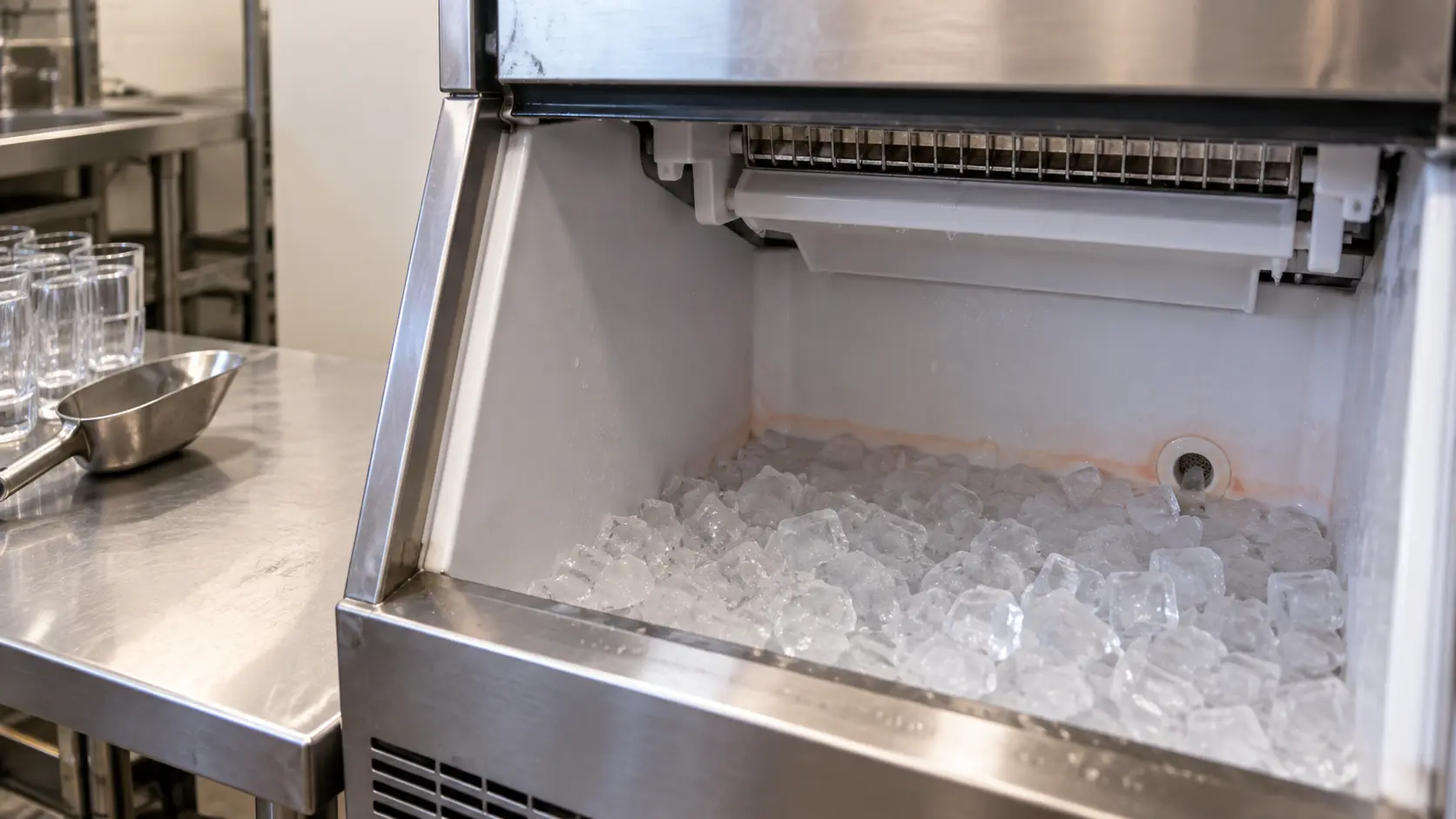
The trough, pump, distribution tube, curtain and evaporator stay wet and cool all day, which is ideal for biofilm. It starts as a pink, orange or black film on the curtain and in the corners of the trough, and it gives ice a musty or sour edge long before anyone sees it on the cubes. In its annex, the FDA Food Code explains that ice bins need routine cleaning precisely so slime, mold and soil residue cannot develop.
Wiping what is visible does not reach it; the whole routine printed in the manual, with every removable part out, does. Manitowoc says an extremely dirty machine has to be taken apart for cleaning, and that its own cleaner and sanitizer are the only products approved for its machines. Scotsman adds that a machine installed near a source of yeast, such as a bakery prep area or a brewery floor, may need sanitizing more often.
- Musty or earthy: biofilm in the water system or the bin.
- Sour or yeasty: airborne yeast, often from dough, beer or fruit nearby.
- Chemical or bleach-like: cleaner or sanitizer not fully flushed after a cleaning cycle.
- Flat or metallic with white flakes: scale, often with a supply change or an old filter.
- Onion, fish or smoke: odors absorbed from the air or from food kept in the bin.
A chemical taste right after cleaning
If the taste appeared after a cleaning, the rinse or flush was cut short. Manitowoc's instruction is to discard all ice made while cleaning and sanitizing are under way. Run the machine's own rinse again as the manual describes and discard ice until the taste is gone; never add extra cleaner to shorten the job.
Source: FDA — Food Code 2022 — Ice for use as food or a cooling medium shall be made from drinking water (3-202.16); ice bins and ice makers cleaned at the manufacturer's frequency or often enough to preclude soil or mold (4-602.11); self-service scoops and tongs at least every 24 hours; Manitowoc — Indigo NXT ice machines, installation, operation and maintenance manual — Water treatment to remove chlorine odor and taste; only Manitowoc cleaner and sanitizer approved; extremely dirty machines taken apart; discard ice made during cleaning; bin drain air gap and separate venting; location free of airborne contaminants, away from heat and sunlight; Scotsman — C1448 and C1848 modular cuber installation and user's manual — Filters that remove chlorine contribute to slime; the ice-making process removes chlorine from the ice; a nearby source of yeast calls for more frequent sanitation

The bin, the scoop and what goes in them
Open bins pick up smells. Scotsman's residential manual says never to keep anything in the ice storage bin that is not ice, because bottles are unsanitary and their labels can slip off and block the drain. Commercial bins see the same thing with chilled garnish, pitchers and lemons, all of which leave traces in ice that sits for hours.
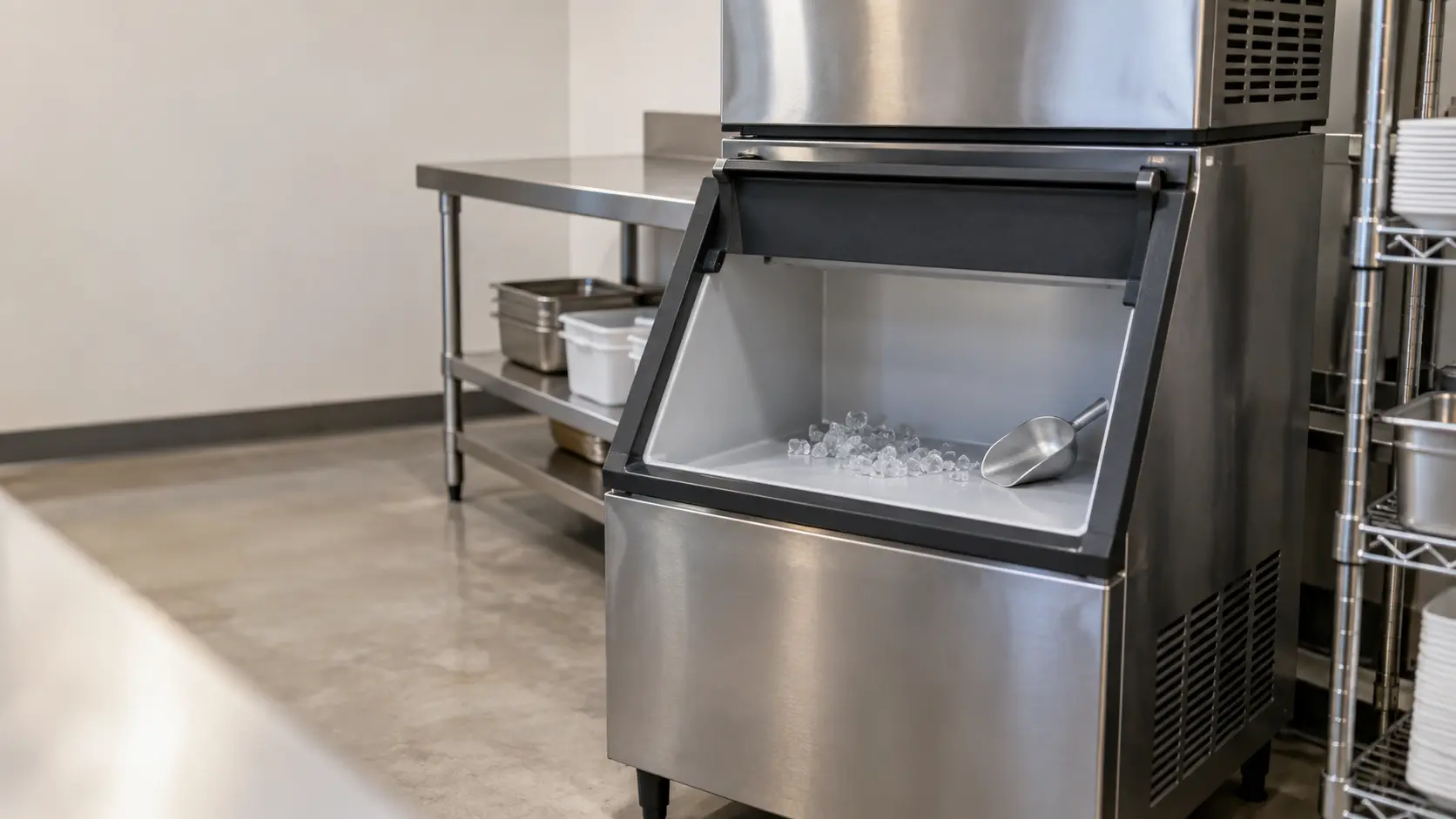
The scoop matters as much as the bin. It should live in a holder outside the ice, not buried in it, and be washed like any other food utensil. The Food Code sets a daily minimum for self-service scoops and tongs; a bar scoop handled by staff all night deserves at least the same attention.
The drain and standing water
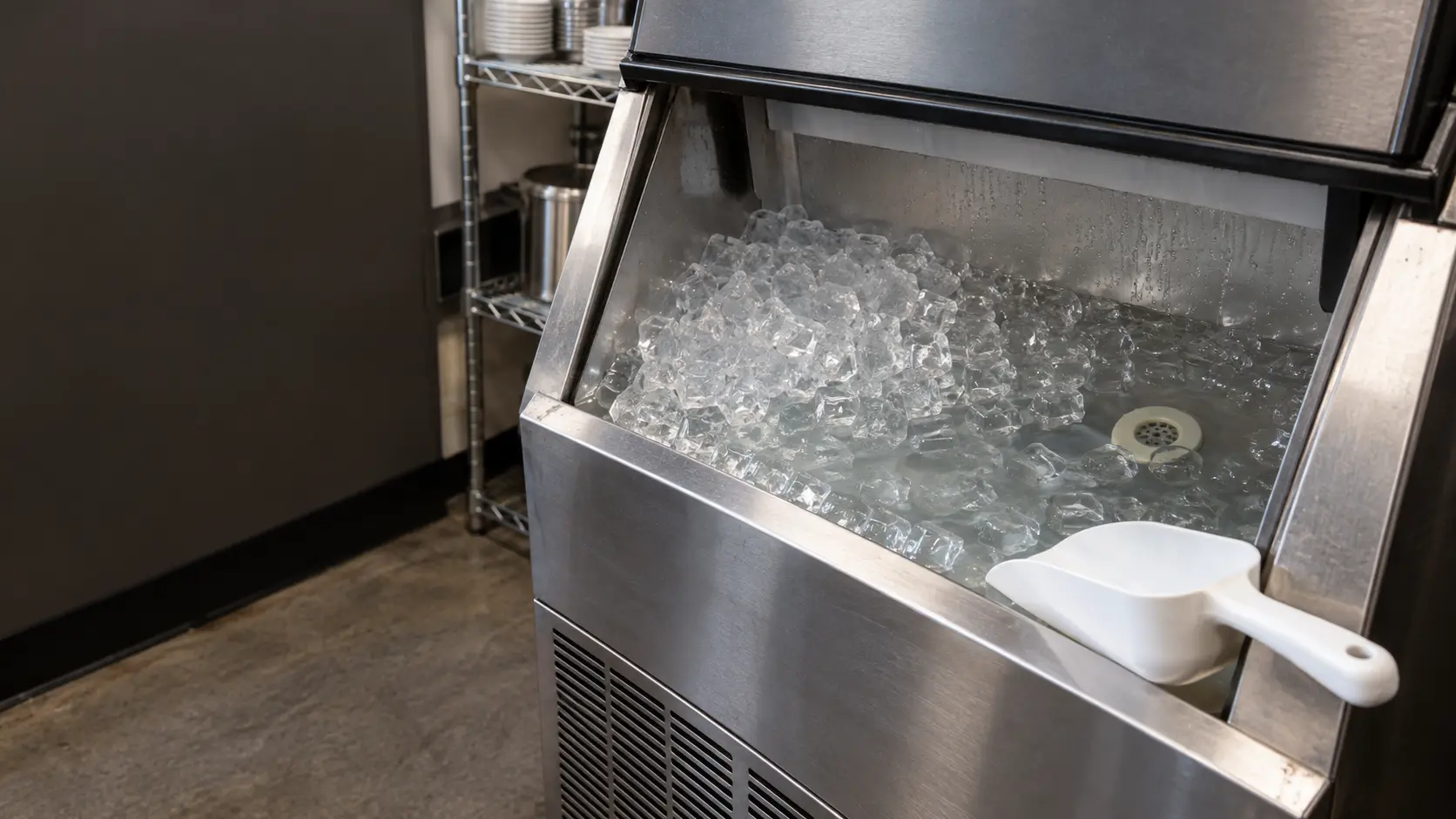
A bin drain that runs slowly leaves melt water standing under the ice, and a floor drain without a proper air gap can let sewer smells rise toward the bin. Manitowoc requires an air gap at the bin drain termination and separate venting for the machine and bin drains. Standing water in the bin or a sewer smell near the drain is a booking, not a rinse.
Source: FDA — Food Code 2022 — Ice for use as food or a cooling medium shall be made from drinking water (3-202.16); ice bins and ice makers cleaned at the manufacturer's frequency or often enough to preclude soil or mold (4-602.11); self-service scoops and tongs at least every 24 hours; Scotsman Home Ice — SRC065 residential ice machine installation and user's manual — Never keep anything but ice in the bin; bottle labels can plug the drain; wash the scoop like any food container
The air around the machine
Manitowoc asks for a location free of airborne contaminants, away from heat-generating equipment and out of direct sunlight. In practice that rules out a spot beside a fryer vent, a mop sink with chemicals, or a storeroom where onions and cleaning products share a shelf. An air-cooled unit draws a lot of room air through its cabinet, and the smell of that room ends up in the bin.
If moving the source is not possible, closing the bin door between uses and keeping stock in sealed containers helps. When the smell is strong enough to notice at the bin with the door shut, it is worth asking whether the ice machine belongs in that room at all.
- A fryer or grill exhaust within reach of the air intake.
- Open produce, especially onions, citrus and herbs, on shelves beside the bin.
- Chemical storage or a mop sink in the same small room.
- Direct sun on the cabinet or the supply line.
Source: Manitowoc — Indigo NXT ice machines, installation, operation and maintenance manual — Water treatment to remove chlorine odor and taste; only Manitowoc cleaner and sanitizer approved; extremely dirty machines taken apart; discard ice made during cleaning; bin drain air gap and separate venting; location free of airborne contaminants, away from heat and sunlight