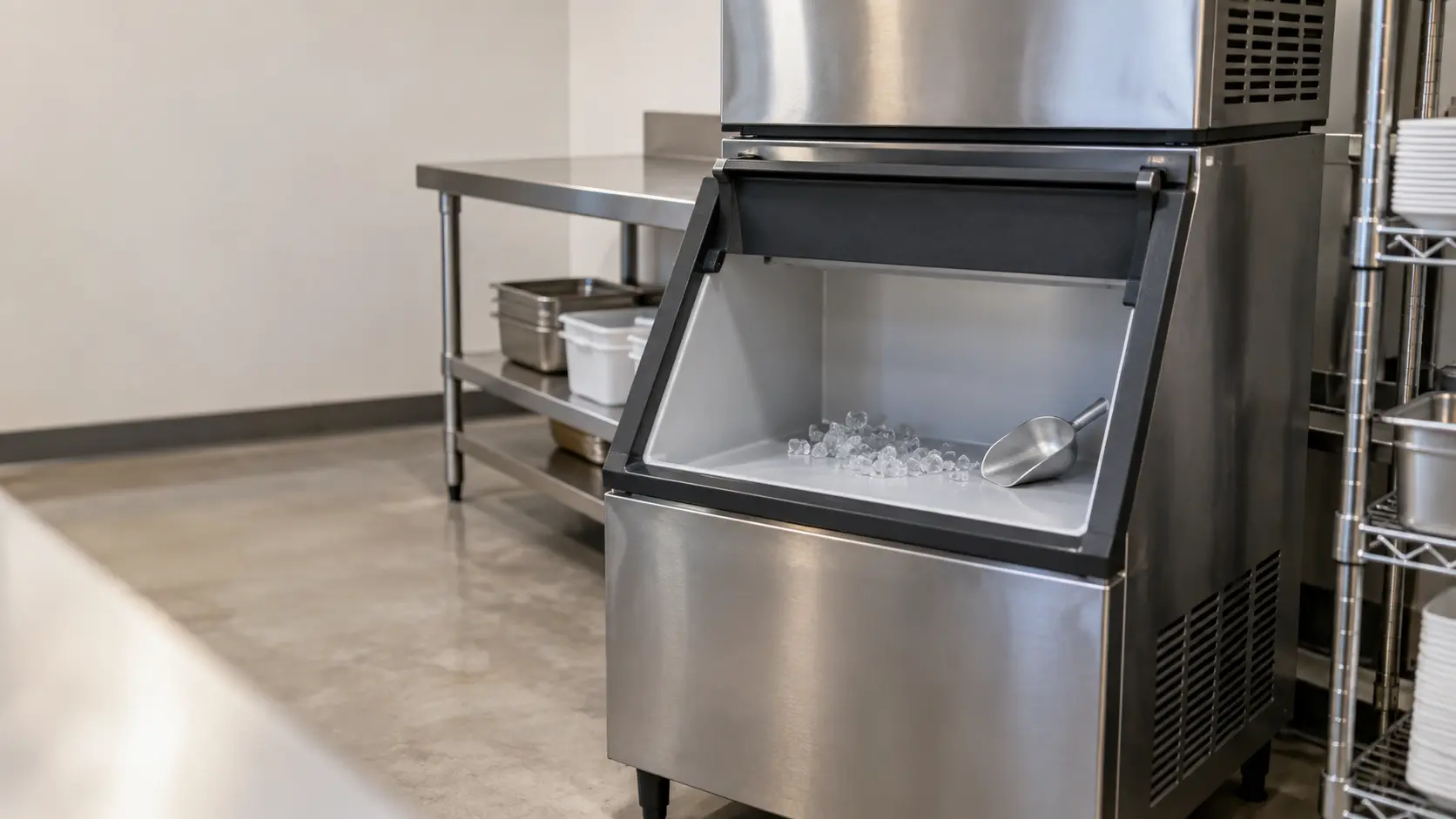


What the ice is telling you
Common problems
guides.
What an ice machine means when the bin stays low, the cubes come out thin, hollow or cloudy, the ice tastes of something it should not, or a light keeps asking for a cleaning you already did.
Mon–Sat, 8am–8pm
- Three guides
- Read before you book
- Says where to stop
Book a visit
Three short steps, about a minute.
or call (844) 410-9163
Loading appointment form…
The appointment form couldn’t load. Please try again.
Common problems,
guide by guide.
Here the starting point is the ice itself, its amount, its shape and its taste, and the route runs backward to whatever changed. It is written for whoever notices first that something has changed: a bar manager whose bin is no longer full at opening, a clinic office manager who hears complaints about the ice at the patient water station, or a homeowner with a clear-ice undercounter unit that has started making cloudy, dimpled cubes.
All 18 guides
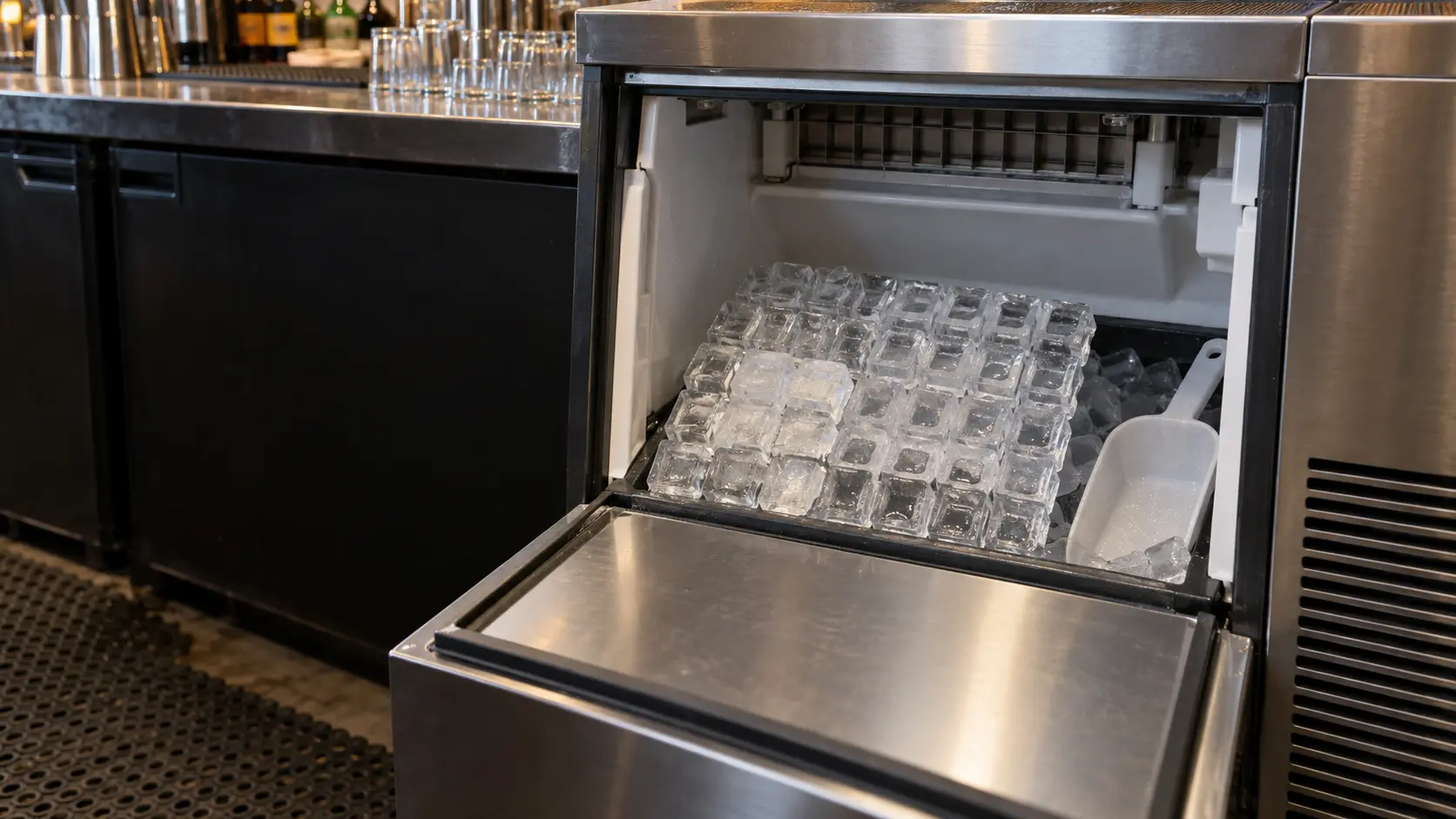

What the ice is telling you.
The causes in each guide are ordered by how frequently we find them on modular heads, self-contained undercounter cubers, nugget machines and ice and water dispensers. Heat around the condenser, water arriving slowly, scale on the evaporator and biofilm in the water path account for most complaints, and each has a check that needs no tools and no panel removed.
The shape of the ice carries more information than most people expect. A sheet of cubes that is full at the bottom and thin at the top, a machine that harvests on time but drops shallow cubes, and ice that tastes of the room it sits in each point to a different stage of the freeze and harvest cycle, and the guides explain how to read them.
Each guide names the moment the answer is no longer outside the cabinet. The thickness probe, the inlet valve, the harvest components and anything on the cooling circuit are for a technician, and on a machine that runs on R-290 the circuit is never a place for anyone else to work.
Not sure where to start?The short answerWhy an ice machine makes less ice: room heat, a clogged condenser and a slow fill
An ice machine making less ice is usually losing the heat battle or the water battle: hot room air, a clogged air filter or condenser, a partly closed supply valve or a dirty inlet screen.
The short answerShallow or hollow ice machine cubes: the trough, scale and the thickness probe
An ice machine making small or hollow cubes is usually short of water during the freeze or harvesting early: a low trough, a dirty inlet screen, a loaded filter, warm supply water, scale on the plate or a thickness probe out of adjustment.
The short answerIce machine ice that tastes musty, chemical or of the room: from the tap to the bin
When ice machine ice tastes bad, trace it in order: the incoming water and the filter cartridge, slime or scale in the water system, the bin and scoop, the drain, and what is stored or cooked near the machine.
When reading
is not enough.
If the checks in these guides did not settle it, the visit picks up from there, stop by stop.
What repairs cost- 01One cycle, watched closely
- 02The cause, then the price
- 03Parts that travel with us
- 04A harvest before we go
The problems
these answer.
Each has a page of its own, with the causes in the order worth checking.
All 17 problems


Questions about
common problems.
Which problem should I read about first?
Are these guides for home or commercial ice machines?
Do I need the manual to use these guides?
When is a common problem really an urgent one?
The other
sections.
Split by what you are trying to find out rather than by which part of the appliance it concerns.
All guides

Maintenance and prevention
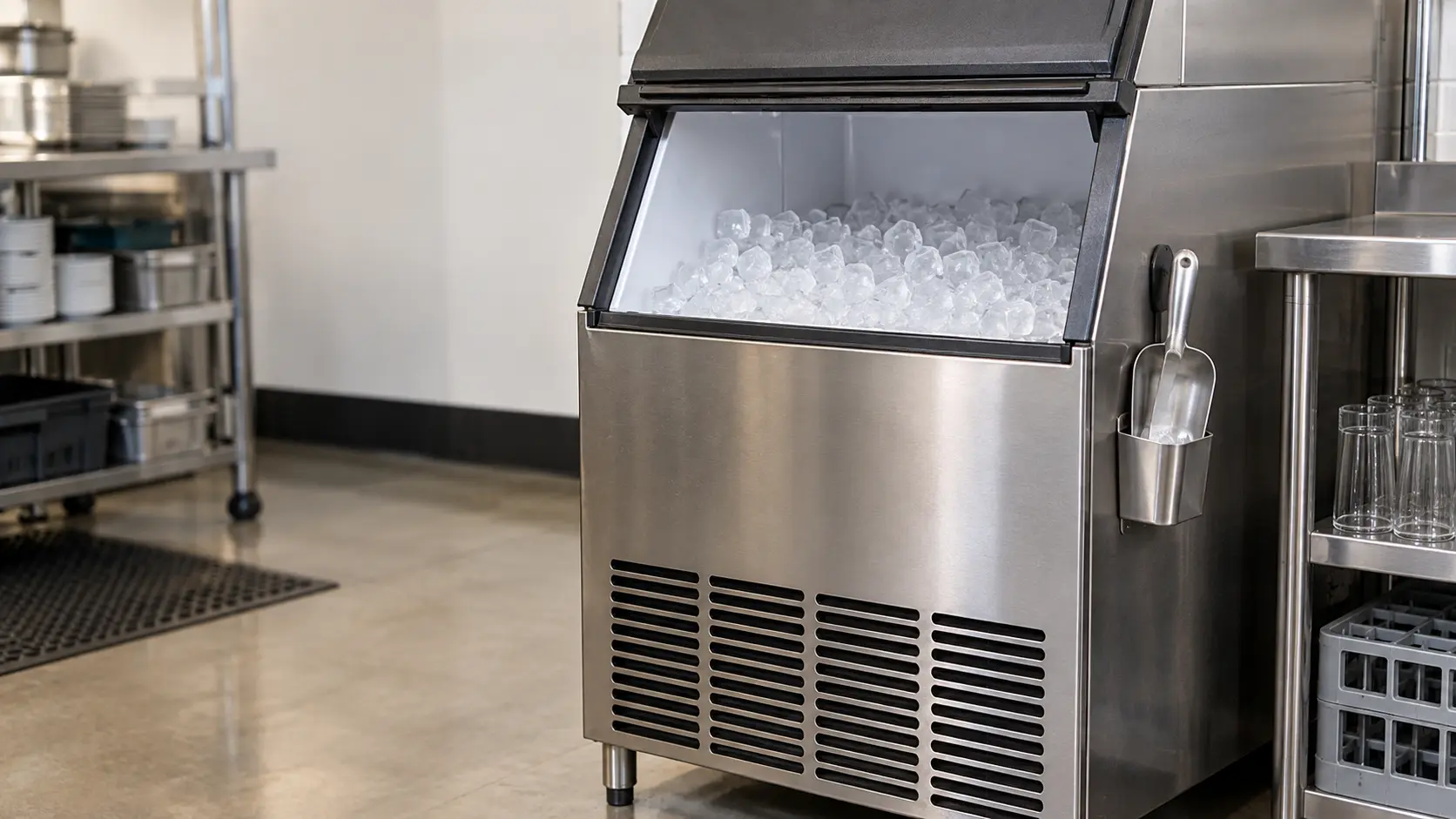
Ice hygiene, water and gas


Start from your question
The four questions most visits start with, each with the guide that answers it.
18 guidesWhere to start Where to startBack to your everyday
Let’s get your ice machine working again.
Three short steps online, or one call. Tell us what you are seeing and pick a window that works.