
What is the difference between a dispenser and a bin?
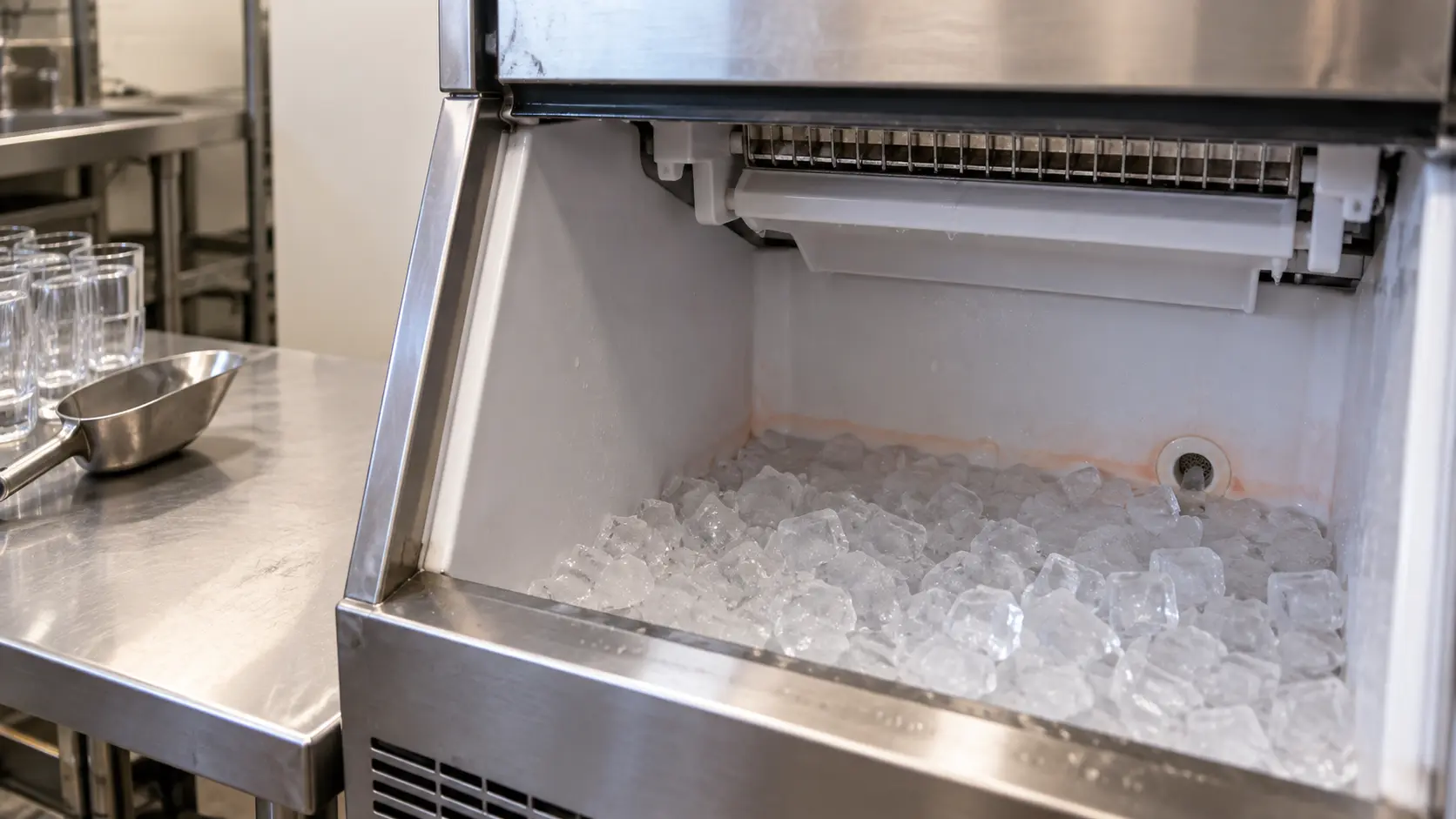
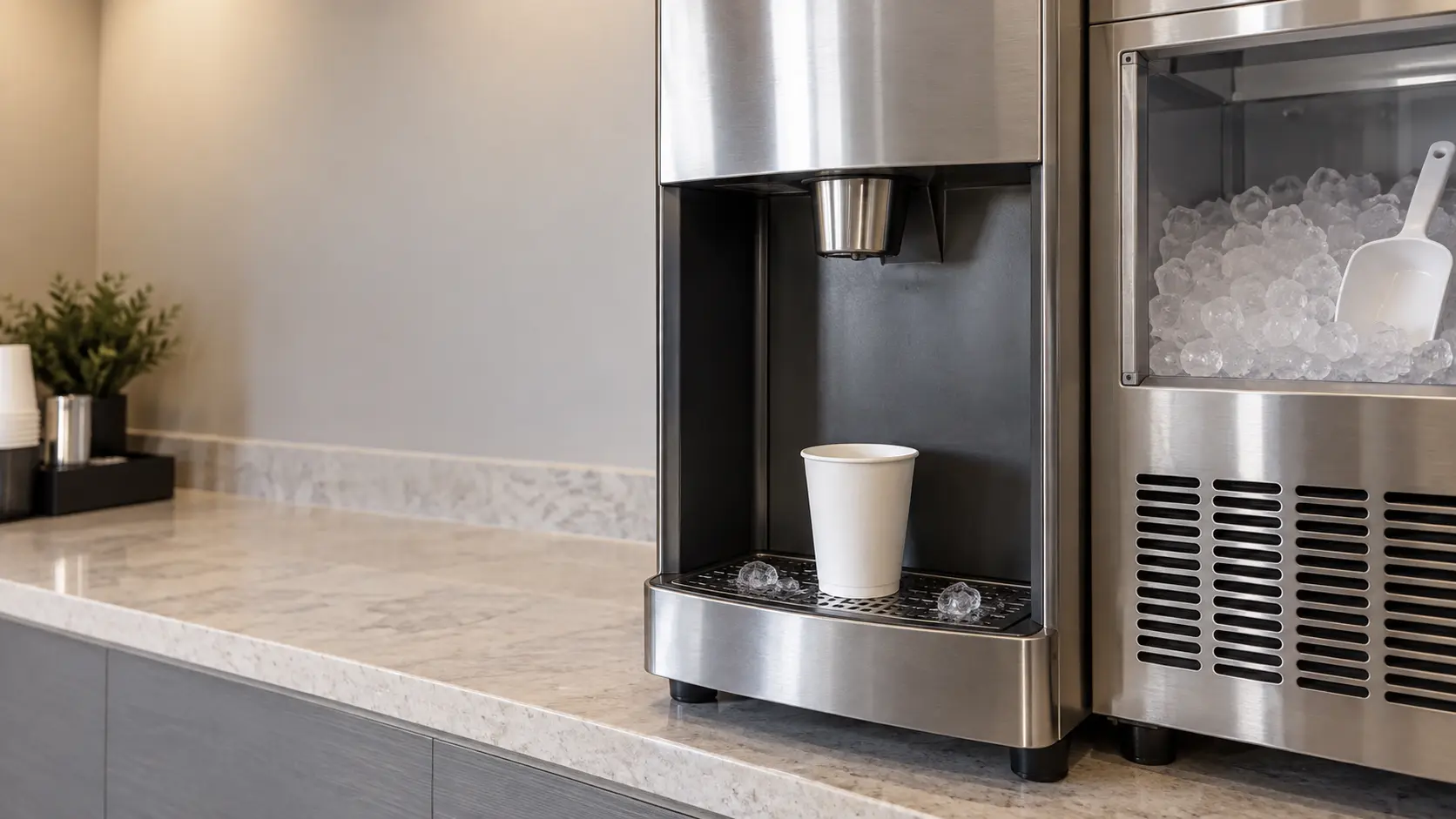
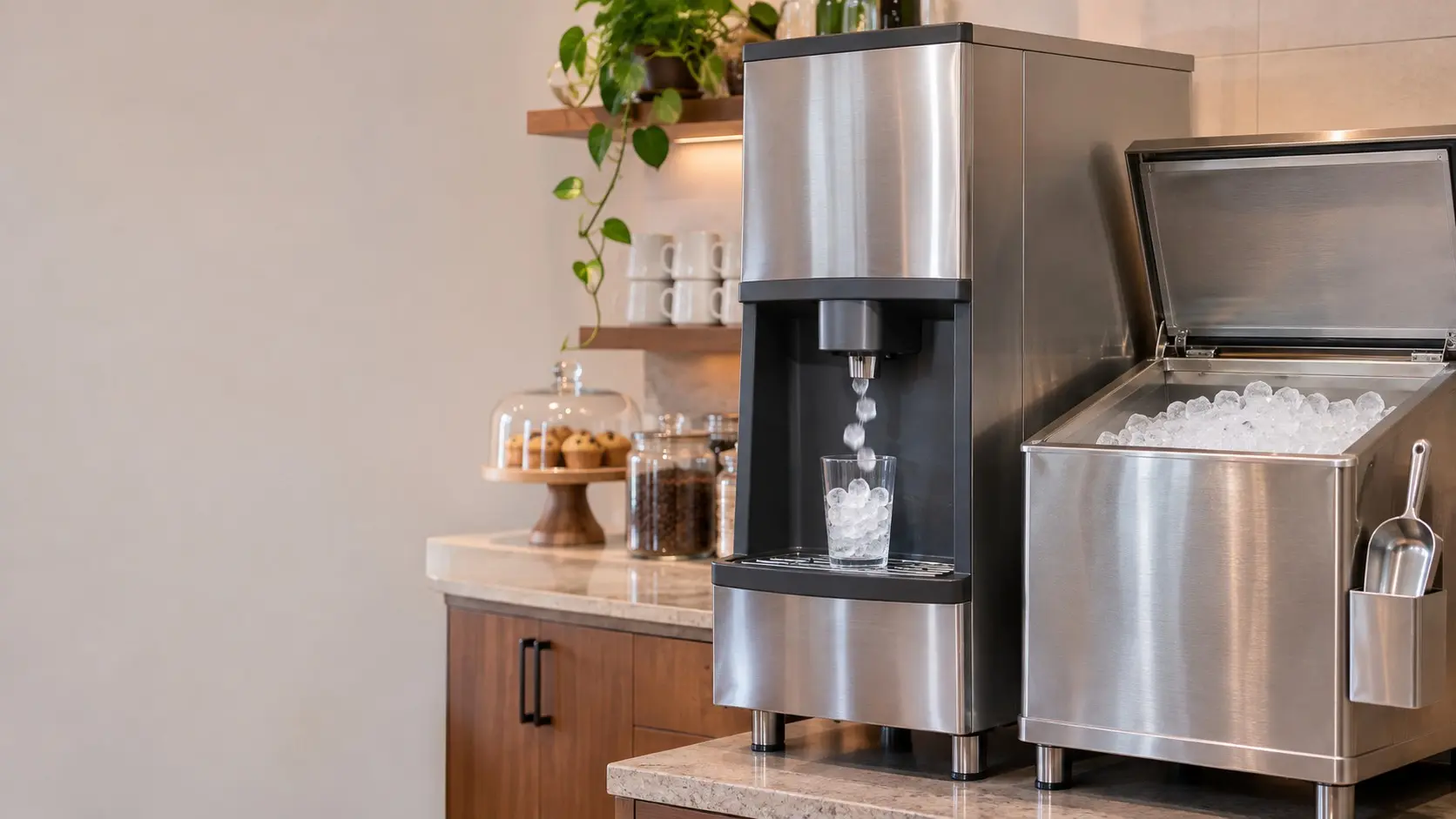
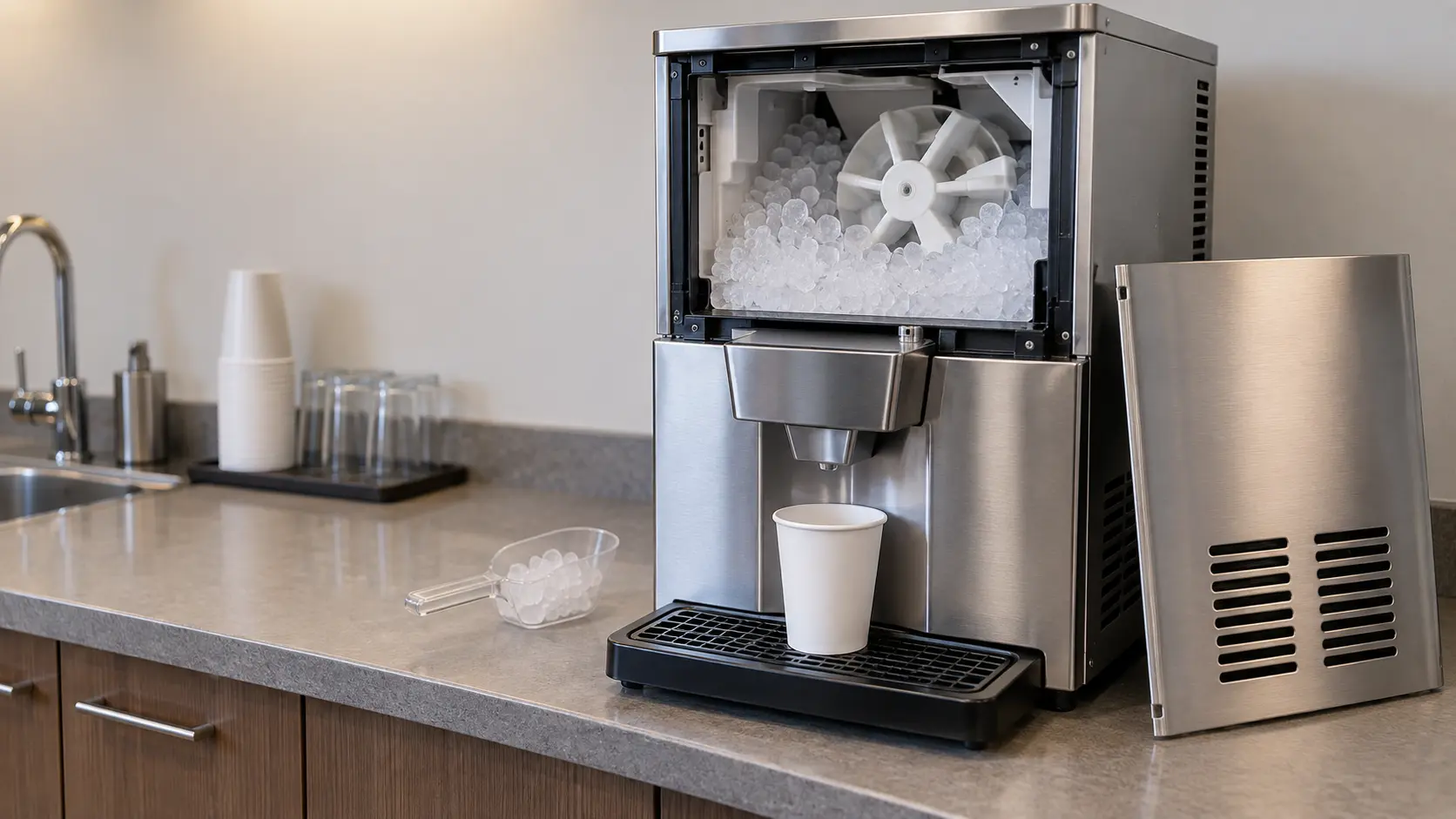
An ice dispenser delivers ice through a chute when a lever, button or sensor is triggered, so nobody puts a hand or a scoop into the storage. An open bin is a storage box under or beside the machine, with a door or lid, and ice is taken out with a scoop.
Both sit under an ice machine head or are built into one, and both are the place where ice meets the room. That is why this choice is mostly about hygiene and handling, not about how the ice is made. How the ice is made, the cube, nugget or flake type, is a separate decision.
What the choice actually changes
A bin changes who touches the ice and with what. A dispenser changes what has to move to deliver it: a motor, a paddle or gate, a chute and a drain for melt water. Neither changes the water quality that goes in, which the scale and the water filter guide covers.
Which is better for hygiene?
A dispenser usually reduces contact, but only if its chute and cavity are kept clean. A bin and scoop is acceptable if the scoop is handled correctly, but it depends on people.
| Point | Dispenser | Open bin and scoop |
|---|---|---|
| Hands in the ice | None | Possible by mistake |
| Scoop | None | Needs a clean holder outside the ice |
| Where slime forms | Chute, paddle and drip area | Bin walls, door seal and scoop holder |
| Cleaning access | Parts must be taken apart | Open and wipe |
| Risk if neglected | Hidden film in the chute | Visible film, easy to ignore |
The food regulator in your area decides the rules for your site. The FDA publishes the Food Code as a model, and state and local regulators adopt their own versions, so the health department is the source for what is required where you are.
The scoop rule
If you use a bin, keep the scoop out of the ice, in a clean holder, not buried in the bin or left on a counter; that is what health inspectors commonly look for, and your local version of the Food Code sets the exact rule. A glass used as a scoop puts hands near the ice and can chip or break into it. Staff habits and a visible holder matter more than the hardware.
Source: FDA Food Code — confirms the Food Code is a model that state and local regulators adopt as their own rules

How does slime show up in each?
Slime and mold grow where water, ice residue and warmth meet. In a bin, it collects as a pink or tan film on walls, the drain, the door and the scoop holder; see slime and mold in the bin and the slime or mold problem page.
In a dispenser, the same film can form inside the chute, around the paddle and in the tray, where it is out of sight. A dispenser that smells or has a slimy lip needs its chute taken apart and cleaned. The cleaning and sanitizing an ice machine guide shows the steps, and an ice machine cleaning and sanitizing visit does both the machine and the storage.
The cleaning time
A bin takes less time to open and wipe, but it must be emptied for a real sanitizing. A dispenser takes longer to disassemble but is cleaned less often at the surface. Plan the cleaning into the day either way, and follow the machine's manual for the solutions to use and the contact time.
What breaks on each?
An open bin has few parts: a door, a seal, a drain and sometimes a bin level switch. A dispenser adds a gearmotor, a paddle or auger, a gate, a solenoid or a sensor, and a chute that can jam.
- Dispenser: ice that bridges and will not fall, a motor that hums but does not move, a chute that leaks, a sensor that does not see a glass
- Bin: a door seal that lets in warm air, a drain that backs up, a bin control that stops the machine before the bin is full, or fails to stop it
A dispenser that does not deliver is a dispenser mechanism repair case, and the dispenser not dispensing problem shows what to check first. A machine that stops making ice with the bin not full, or keeps making ice into a full bin, points to the control, which is the bin control repair service. The ice dispenser repair page lists the types of dispenser we service.
Which is cheaper to keep running?
An open bin, because there is little to wear out. A dispenser costs more over time in parts and visits, but it can save labor and reduce risk where staff handling is the problem. The balance depends on the volume and the staff.
How should you choose?
Choose on who serves the ice and how much is taken.
- Self-serve areas used by the public lean toward a dispenser, and your health department may not allow customers to scoop from a bin at all
- A back-of-house station used by trained staff can use a bin and scoop
- High volume with fast turnover suits a bin or a large dispenser, depending on the machine
- If cleaning time is short, an open bin with a visible scoop holder is easier to keep clean
- If a health inspector or your own policy calls for no hand contact, choose a dispenser
Pair the choice with the machine's output; the sizing an ice machine for the day guide shows how to match capacity.