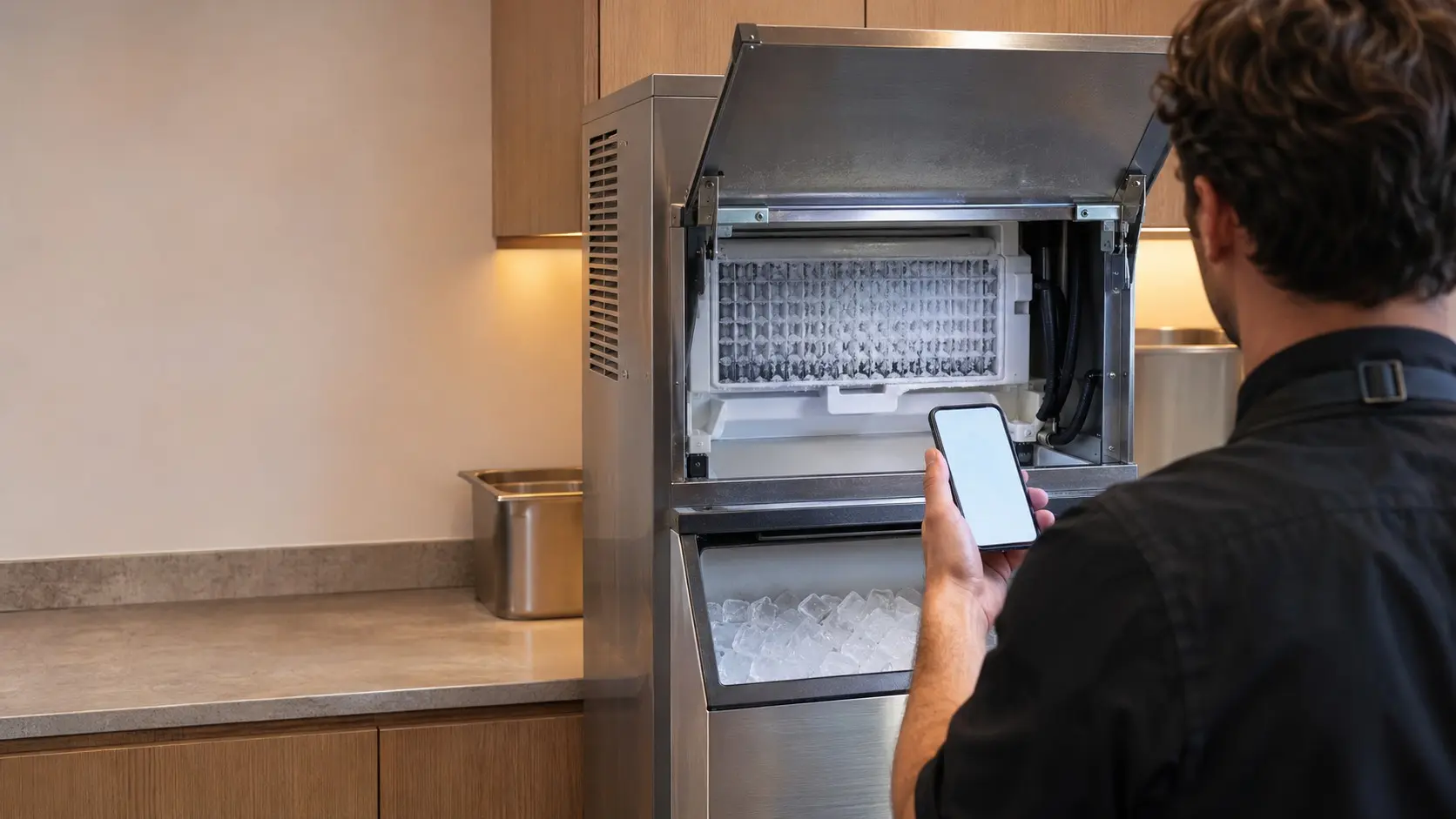


What is a freeze cycle, and why clock it?
A freeze cycle is one round of the machine's work: water runs over a cold evaporator and freezes into a sheet, then a short harvest warms the plate so the sheet drops into the bin. The freeze is the long part, the harvest the short part, and the two together set how much ice you get in a day.
Clocking it matters because the cycle time is the number everything else follows from. A machine rated for a given pounds per day achieves that only if its cycles are about as long as its chart says, in a room and with water of a stated temperature.
Two stages, two clocks
Start one clock when water begins to flow over the plate and the compressor is running. Stop it when the sheet begins to release. Start a second one at that moment and stop it when the machine returns to freezing. Write both down.
How do you time it with a watch?
You can do it with a phone stopwatch and a pencil, standing in front of the machine, without opening anything that is wired or live.
- Let the machine run for at least 30 minutes so it is in steady operation, not just starting up.
- Note the room temperature near the air intake and the temperature of the water going in.
- Start timing when the plate frosts over and the water begins to run down it.
- Stop at the moment you hear or see the ice sheet slide, and record the freeze time.
- Time the harvest the same way, then repeat for at least three cycles and use the average.
Do not remove the front panel while it runs unless your manual says it is safe; look through a gap or the clear window if the cabinet has one. Never put a hand near the water pump or the inside of a running machine.
What to write down
Keep a simple log: date, room temperature, incoming water temperature, freeze minutes, harvest minutes, and whether the bin was nearly empty. A log shows direction, and direction is more useful than any single reading. It also gives a technician a head start in a diagnostic visit.

What does a normal cycle look like?
A normal cycle is whatever your manual's performance chart gives for your model at your air and water temperatures. The chart is a table of production against those temperatures, and it exists because the same machine gives very different results in a cold basement and a hot kitchen.
The freeze is always the long stage and the harvest the short one, but the minutes differ widely between models and sizes, so there is no general figure worth trusting; use the chart for yours. Condenser type changes it too; see air, water or remote cooled.
| Condition | Freeze time | Harvest time | Why |
|---|---|---|---|
| Cool room, cold water | Shorter | Longer | Easy to freeze, harder to warm the plate |
| Hot room, warm water | Longer | Shorter | Hard to remove heat, plate warms easily |
| Dirty condenser | Much longer | Short or odd | Heat cannot leave the machine |
| Scaled plate | Normal or longer | Fails or drags | Ice grips the metal |
What does a long or short cycle point to?
A cycle that has grown longer than the chart, with output falling, usually means heat is not leaving the machine or the refrigerant side is weak. A cycle that is too short with thin or hollow ice points at water or at a probe that ends the freeze too soon.
A long freeze
- A dirty condenser, a slow fan or a blocked airflow path. Start with keeping the condenser clean; if the fan is the problem, condenser and fan repair covers it.
- Warm incoming water or a hot room, which the chart will show.
- A low charge or a weak compressor, which only a technician can test.
A short freeze
- Low water flow or a clogged distributor, giving thin cubes. See why the cubes come out small or hollow.
- A probe or sensor that ends the freeze early.
A harvest that drags on
A long harvest means the plate is slow to warm or the sheet will not release, often from scale. That one is the territory of harvest repair, and a plate that stays frozen can end in a solid slab of fused ice.
What should you do with the numbers?
Compare your average to your manual's chart for the room and water temperatures you logged, and compare this week to last week. A single long cycle after the bin ran empty means little; a cycle that keeps creeping up over a few weeks, at similar room and water temperatures, means something is changing.
Clean the condenser and check the water supply first, because those are cheap. If cycles stay long afterwards, send the log with your booking. The lights on the front panel may also show a timer-related message; the guide to reading ice machine lights and codes explains what they mean in general terms.
Three traps when reading your log
- Timing a cycle right after a restart. The first cycle after a cleaning or a power cut runs long while the water and plate settle, so ignore it.
- Comparing a cool morning with a hot afternoon. Compare cycles at similar room temperatures, or adjust your expectation using the chart.
- Reading a full bin as a failure. When the bin control stops the machine, there is no cycle to time; that is a separate question, covered under the bin-full problem.


