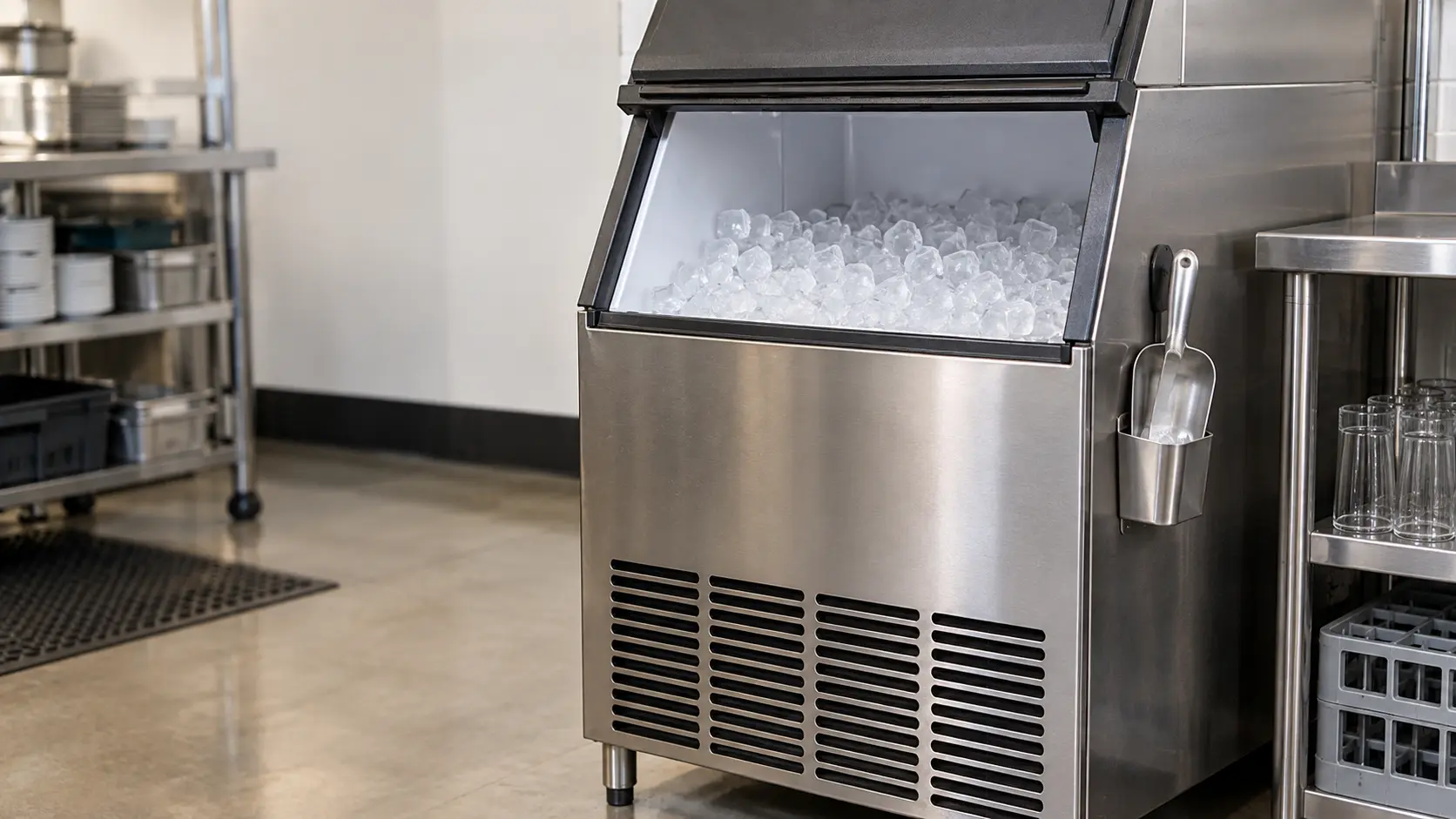

Keeping the ice, the floor and the room safe
Ice hygiene, water and gas
guides.
Why ice is food and the bin must stay clean, what to do when water spreads across a floor or toward an outlet, and what a hiss or a gas smell means at a machine charged with flammable R-290.
Mon–Sat, 8am–8pm
- Three guides
- Read before you book
- Says where to stop
Book a visit
Three short steps, about a minute.
or call (844) 410-9163
Loading appointment form…
The appointment form couldn’t load. Please try again.
Ice hygiene, water and gas,
guide by guide.
This section covers the moments when an ice machine stops being a convenience and becomes a hazard: a film growing where the cubes fall, water spreading across a floor people walk on, or a gas smell in the room where the machine stands. Each guide starts with what to do in the first minutes and only then turns to why it happened.
All 18 guides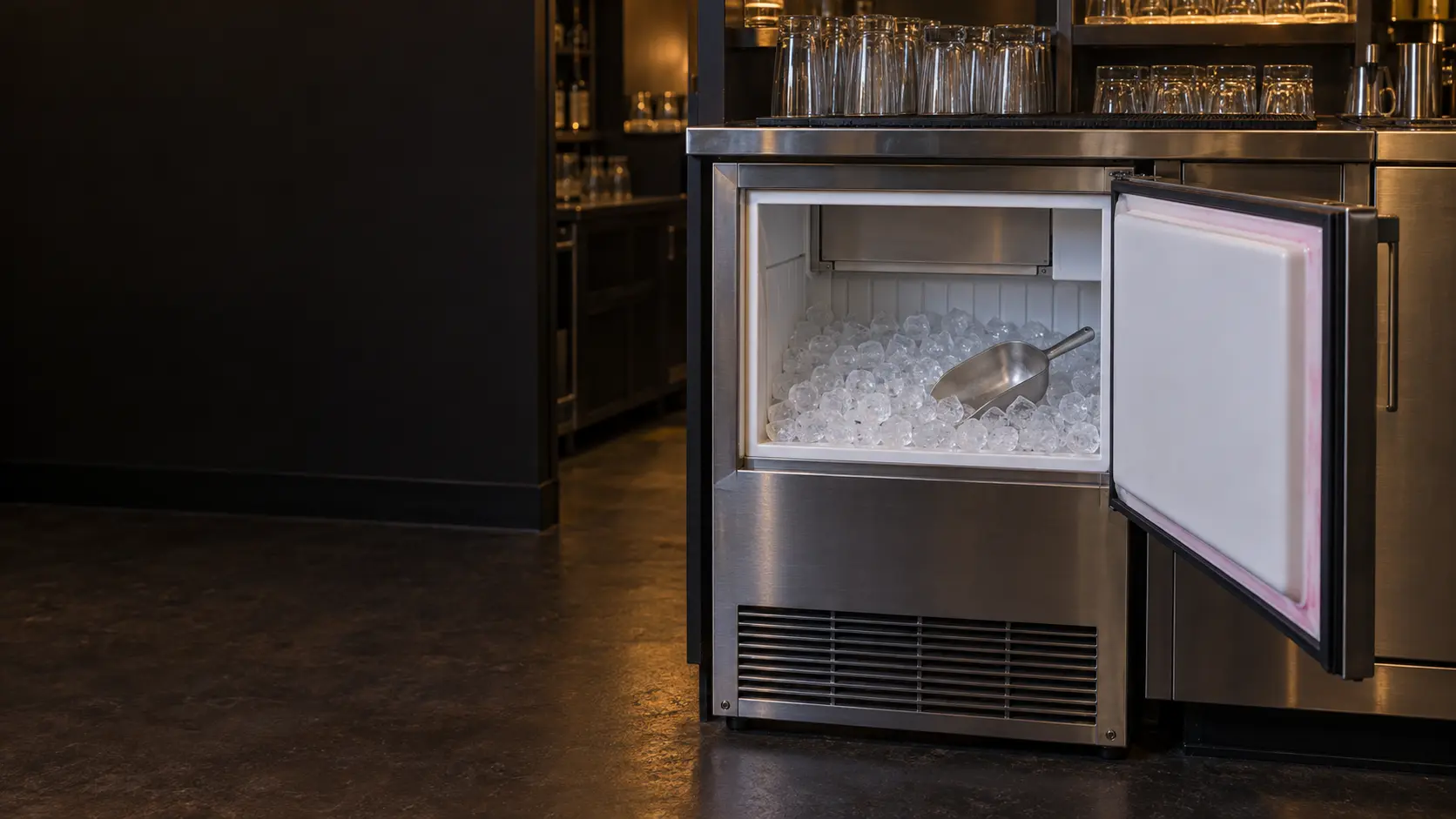

Keeping the ice, the floor and the room safe.
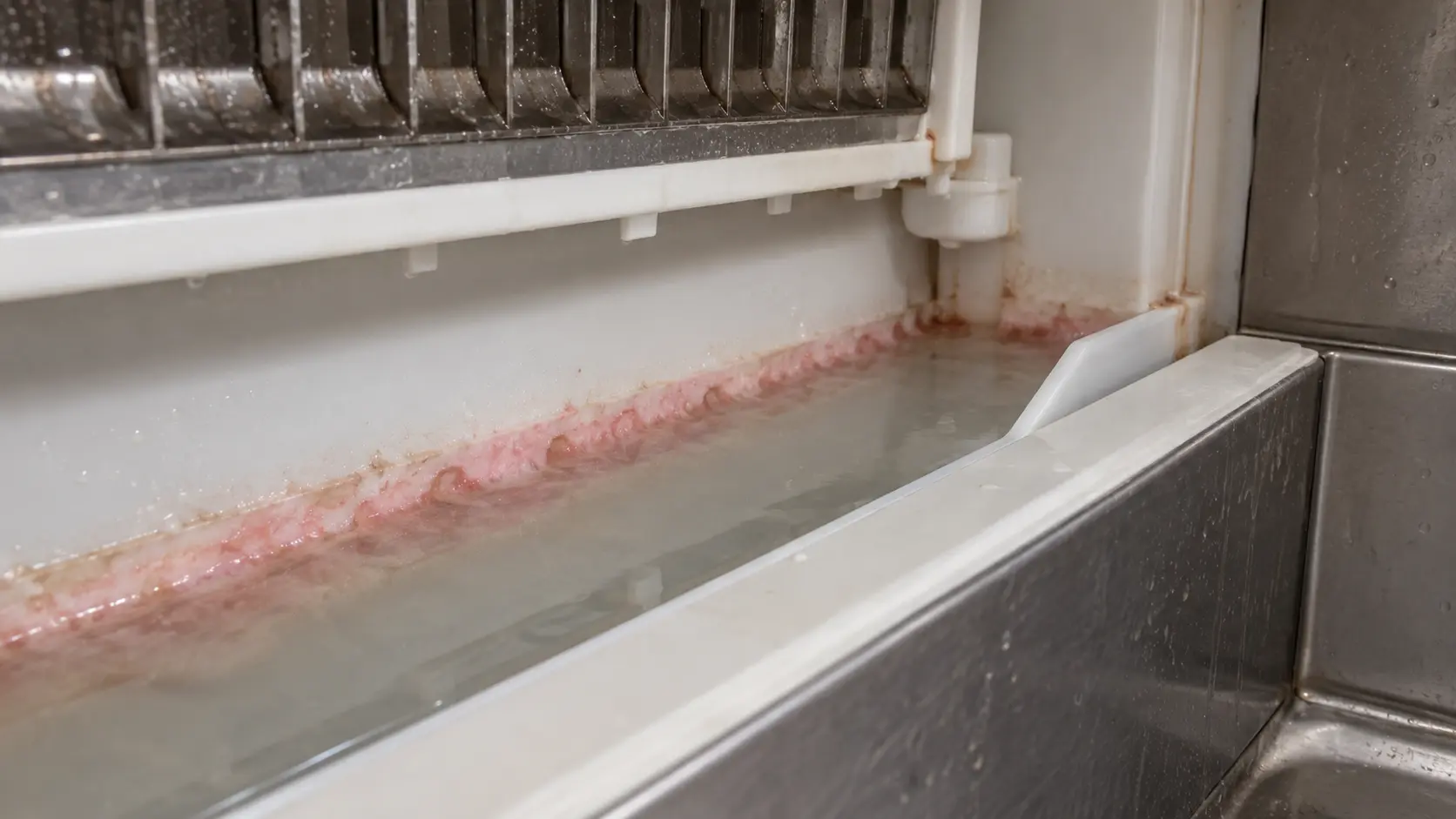
Ice is food. The FDA Food Code says so, asks for it to be made from drinking water, and expects the bin and the enclosed parts of the machine to be cleaned on the maker's schedule or often enough that no mold builds up. The hygiene guide reads those rules with a bar manager, a kitchen lead or a facilities team in mind, and the leak guide explains why drain water that reaches the bin means emptying it.
Many newer self-contained ice machines cool with R-290 propane. EPA allows it only in machines built for it, with warnings and markings on the cabinet, and the makers' manuals list plain house rules for the room around it. Our guide on a gas smell or hiss follows those sources and nothing else, and it keeps the owner's part to leaving the room and calling from outside.
Every guide here ends where an owner's part ends. Mopping, closing a valve, switching a breaker from a dry spot and wiping a bin with the sanitizer the manual names are yours; panels over live wiring, the sealed cooling circuit and the drain plumbing belong to a technician.
Not sure where to start?The short answerSlime and Mold in an Ice Machine: Where It Grows, Why It Returns, What Cleaning Fixes
Slime and mold in an ice machine grow on the wet surfaces the ice passes over: the curtain, the chute, the water trough and the bin door.
The short answerAn Ice Machine Leaking on a Busy Floor: Clear the Path, Close the Valve, Then Trace It
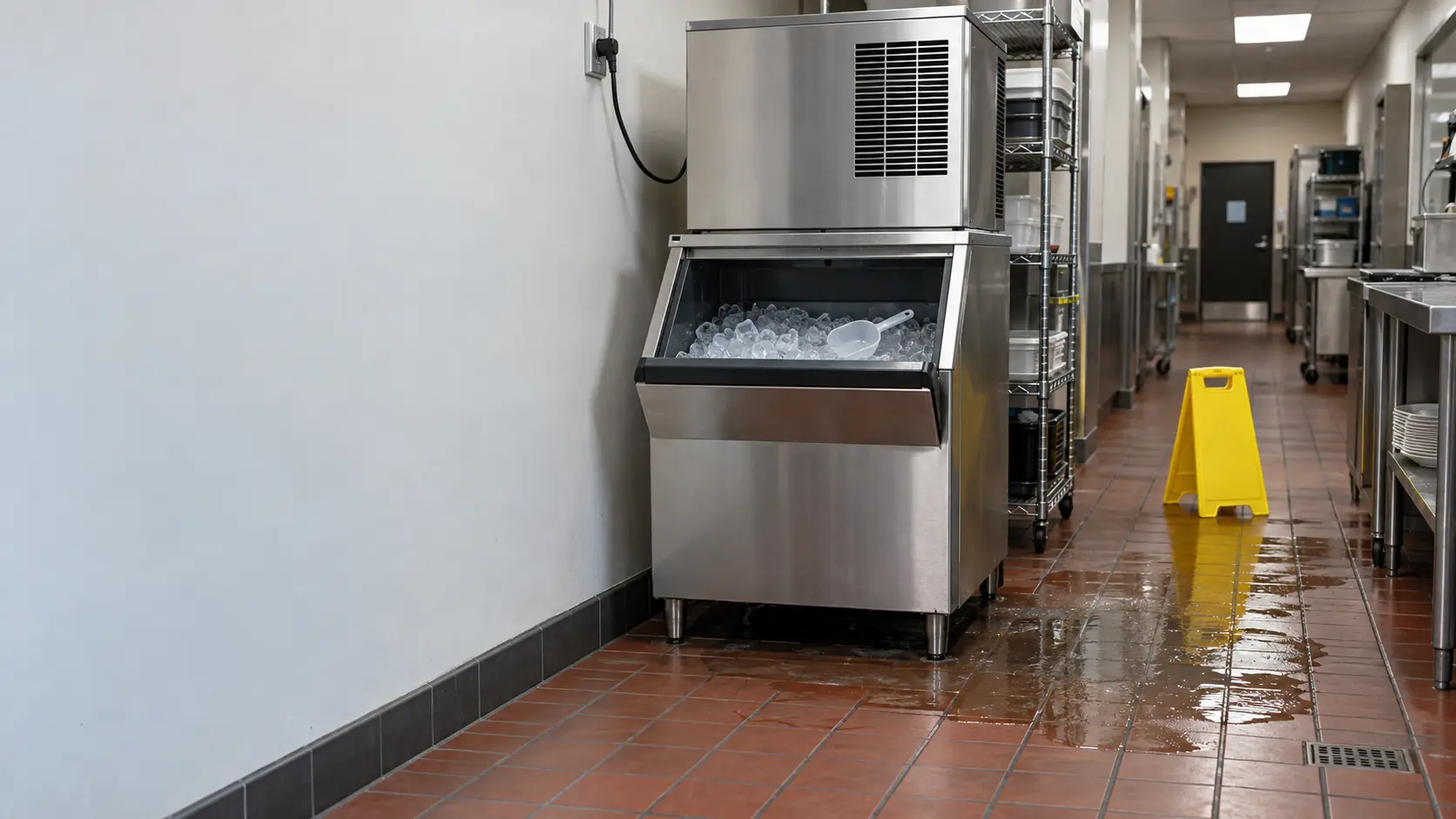
An ice machine leaking on the floor is handled people first: keep staff and guests off the wet area, cut power from a dry breaker if water is near a cord or outlet, and close the supply valve.
The short answerA Gas Smell Near an Ice Machine: Leave the Room First, Then Call From Outside
A gas smell near an ice machine calls for the same first moves as any gas smell: no switches, no flame, open doors and windows, and get everyone out; call 911 from outside if the smell is strong.
When reading
is not enough.
If the checks in these guides did not settle it, the visit picks up from there, stop by stop.
What repairs cost- 01One cycle, watched closely
- 02The cause, then the price
- 03Parts that travel with us
- 04A harvest before we go
The problems
these answer.
Each has a page of its own, with the causes in the order worth checking.
All 17 problems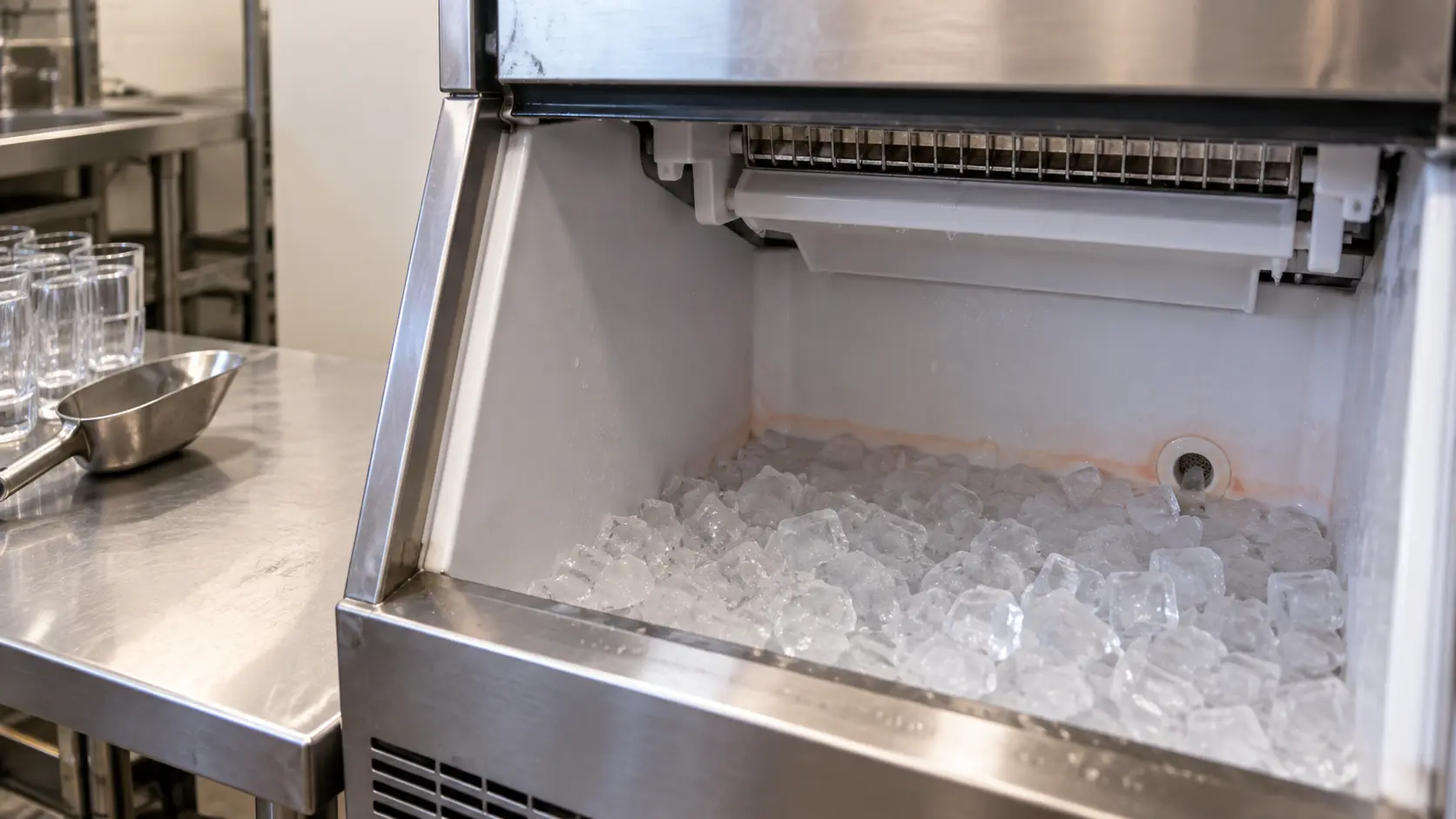
Slime or Mold Growing in the Ice Machine Bin
6 causes, cheapest first

Ice From the Ice Machine Tastes Stale, Chemical or Musty
6 causes, cheapest first

Cloudy, Soft or Wet Ice From an Ice Machine
6 causes, cheapest first
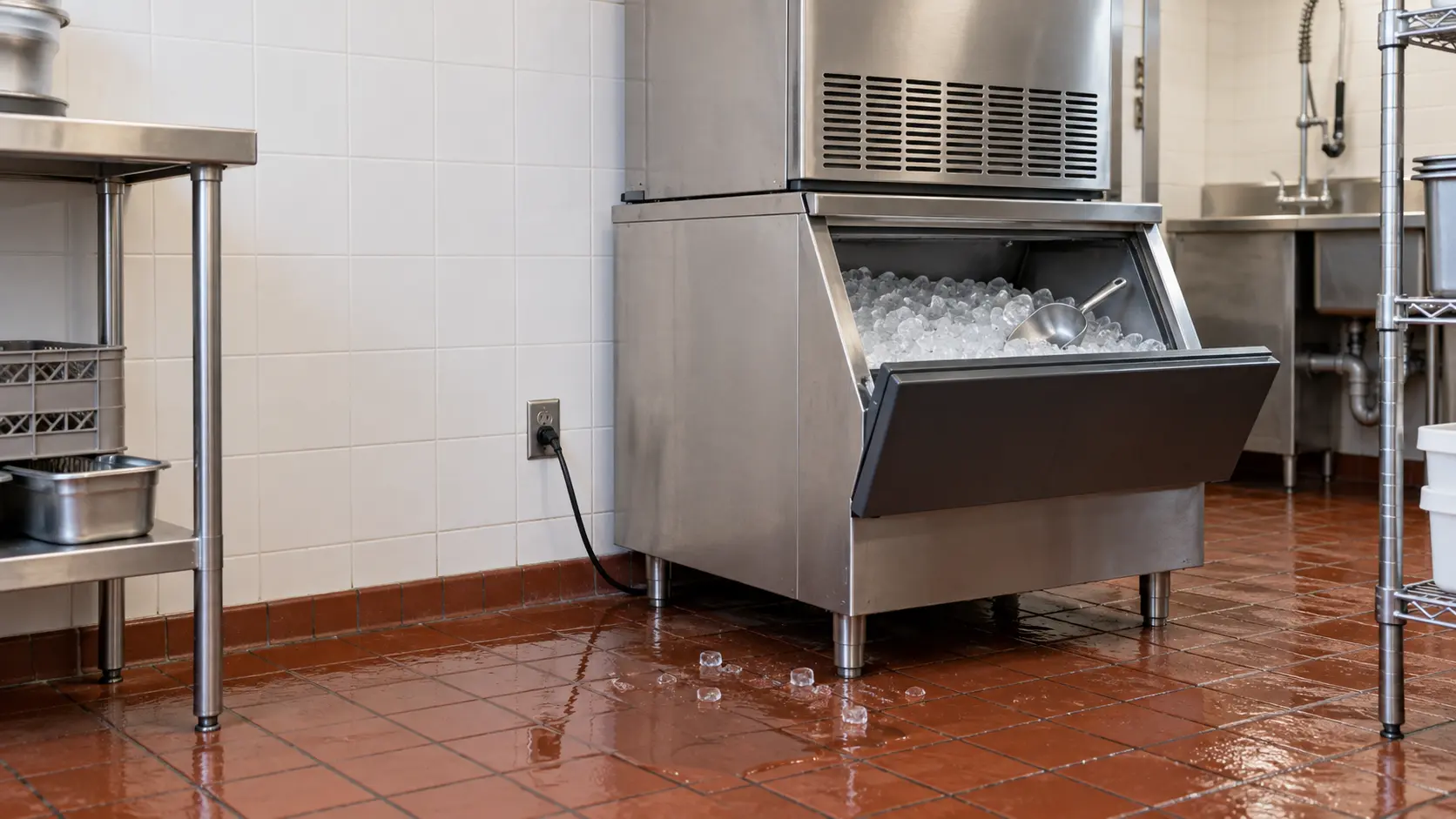
Ice Machine Leaking Water Across the Floor or Under the Bin
6 causes, cheapest first

Questions about
ice hygiene, water and gas.
Who should read the ice hygiene and safety guides?
Is ice from an ice machine treated as food?
What is the first thing to do about water on the floor near an ice machine?
Can an owner fix a gas leak on an ice machine?
The other
sections.
Split by what you are trying to find out rather than by which part of the appliance it concerns.
All guides


Back to your everyday
Let’s get your ice machine working again.
Three short steps online, or one call. Tell us what you are seeing and pick a window that works.